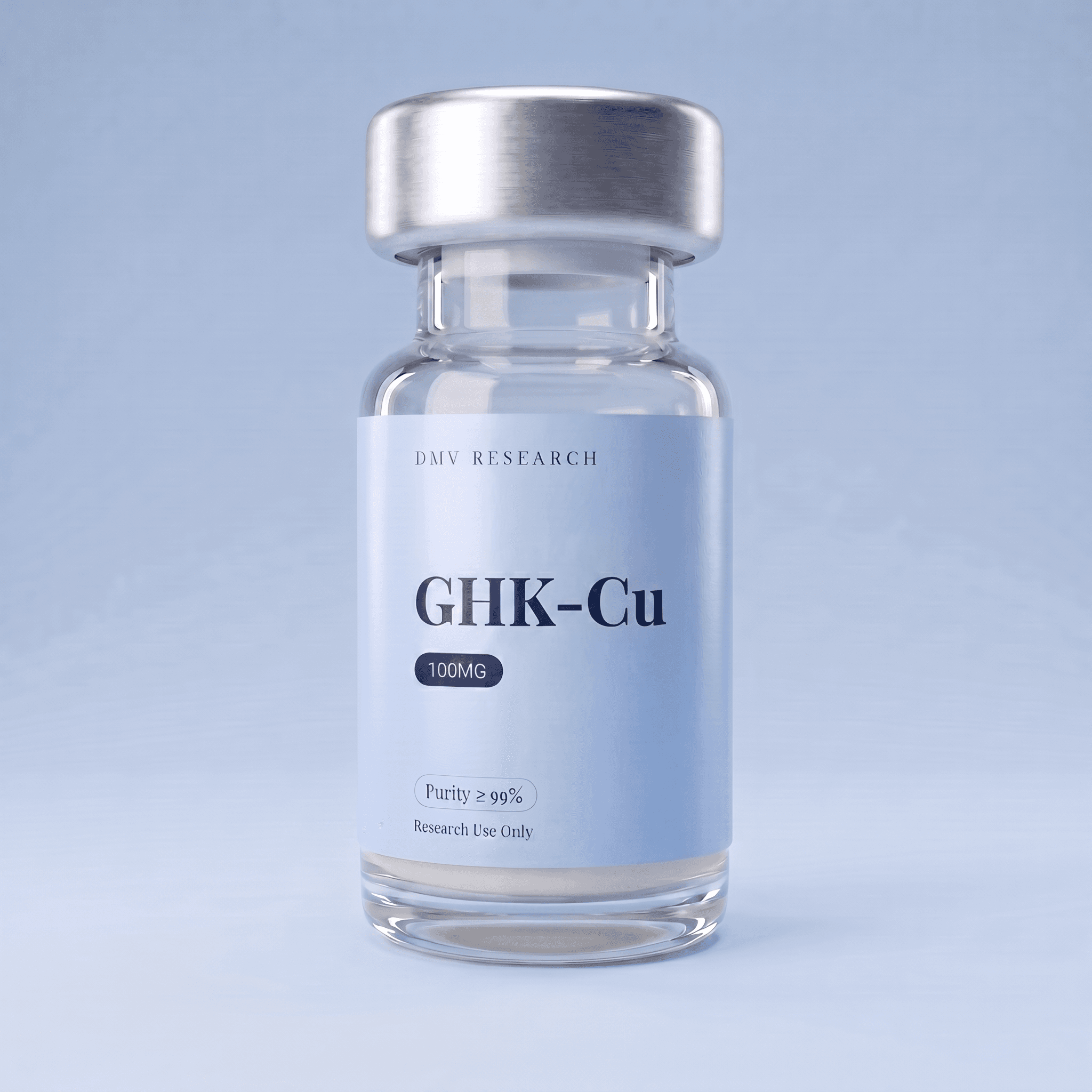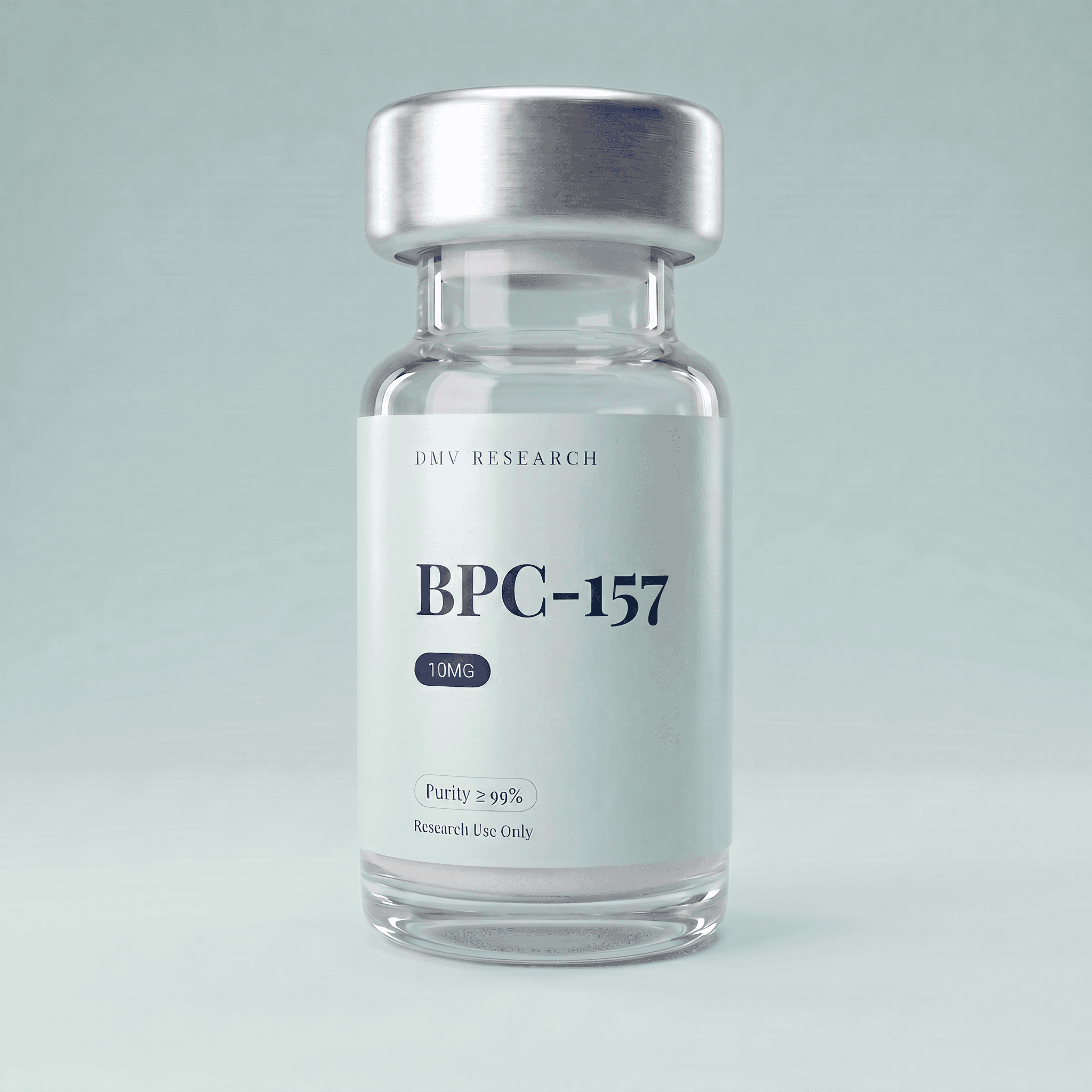
BPC-157
Add 2 more to unlock 17% off
As of 2026-06-08, DMV Research publishes 1 third-party certificate of analysis for BPC-157 (CAS 137525-51-0), for laboratory research use only.
BPC-157 (Body Protection Compound-157) is a synthetic pentadecapeptide (15 amino acids), a partial sequence of a protein found in human gastric juice, studied in preclinical models for its receptor-binding pharmacology and structural characteristics. It is not approved by the FDA or any regulatory agency for human therapeutic use. Each vial contains 10mg of lyophilized peptide, verified by third-party Certificate of Analysis.
All products currently listed on this site are for research purposes only. Research use only — not for human or veterinary use.
For laboratory research use only. Not for human or veterinary use. Not for diagnostic or therapeutic use. Not a drug, food, cosmetic, or dietary supplement.
For in-vitro and pre-clinical research use only. Not for human consumption, therapeutic use, or veterinary application. Research Use Only Policy
Text or call (571) 992-4721 or email info@dmvresearch.shop — real people, real fast.
Reach the business line directly at (571) 992-4721.
Tracked shipping
Tracking emailed when it ships
Damaged on arrival?
Replaced free if reported within 48 hours
Secure checkout
256-bit SSL
Certificate of Analysis Report
Third-party HPLC purity testing for this compound by an independent laboratory. Download the full-resolution reports below.
Independently HPLC-tested for identity, purity, and concentration.
Compound Information
Updated 2026-06-08Technical specifications
A synthetic 15-amino-acid research peptide derived from a sequence within human gastric juice protein, studied in preclinical models for its receptor-binding pharmacology and structural characteristics. Not approved by the FDA or any regulatory agency for human therapeutic use.
What Is BPC-157?
- Type
- Synthetic Pentadecapeptide
- CAS Number
- 137525-51-0
- Molecular Weight
- 1,419.5 g/mol
- Molecular Formula
- C₆₂H₉₈N₁₆O₂₂
- Amino Acids
- 15
- Sequence
- GEPPPGKPADDAGLV
- Primary Target
- VEGFR2, nitric oxide system, EGF receptor
Stability Information
Lyophilized (powder)
-20°C· stable
Angiogenic & Repair Signaling
VEGF and NO pathway activation
Research Outcomes
Sources & References
12 sources · research references
HSS Journal
Emerging Use of BPC-157 in Orthopaedic Sports Medicine: A Systematic Review
2025
Vasireddi N, Hahamyan H, Salata MJ, Karns M, Calcei JG, Voos JE, Apostolakos JM
Pharmaceuticals
Multifunctionality and Possible Medical Application of the BPC 157 Peptide
2025
Józwiak M, Bauer M, Kamysz W, Kleczkowska P
International Journal of Molecular Sciences
From Regeneration to Analgesia: The Role of BPC-157 in Tissue Repair
2026
Yuan C, et al.
Not for human consumption. This product is sold exclusively for research and educational purposes. For laboratory research use only. Not for human or veterinary use. Not for diagnostic or therapeutic use. Not a drug, food, cosmetic, or dietary supplement.
All clinical trial data and research findings presented on this page are sourced from peer-reviewed journals and official publications. They are provided for educational reference only and should not be interpreted as medical advice or product claims.
By purchasing this product, you confirm that you are a qualified researcher and will use it in accordance with all applicable laws and regulations. See our Research Use Only policy.